

Rumors of the Death of Market Research are Greatly Exaggerated
Thinking through your insights career in the age of AI

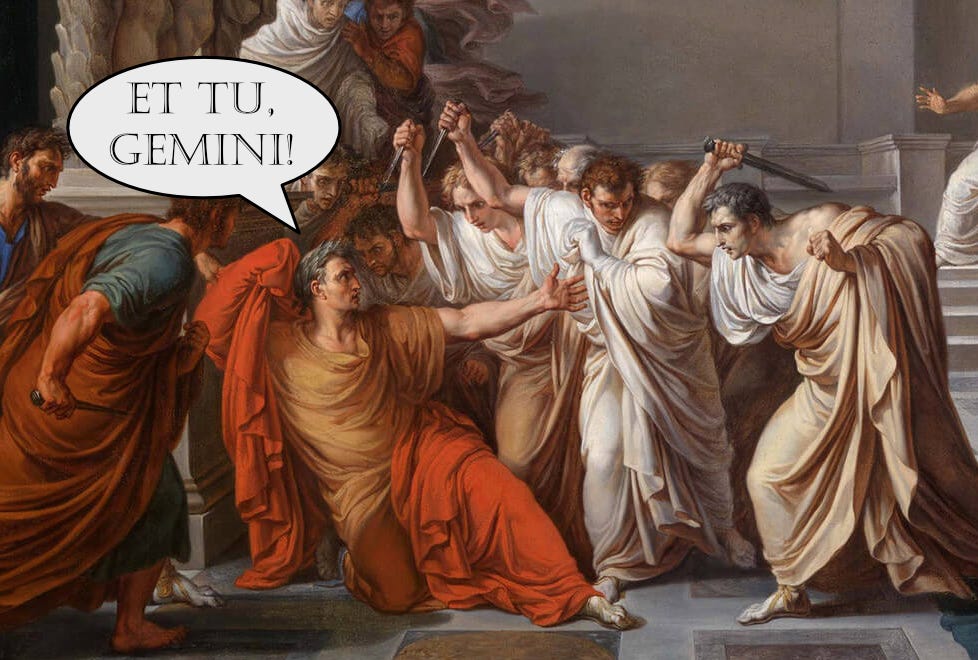
It’s hard to scroll through LinkedIn these days without seeing another post declaring that AI has finally killed market research. You’ll see demos of Google’s Gemini or a new ChatGPT feature, followed by the breathless claim that the insights industry is officially cooked. If you’re a professional in this space, it’s enough to give you a low-grade hum of anxiety.
My advice is that you ignore most of that noise.
What these posts call “market research” is often just desk research, the work most enterprises expect their employees to engage in when building business cases or strategies. It’s the tedious task of sifting through public data, press releases, and syndicated reports to find an answer that’s already out there. And yes, AI is making that task ridiculously easy. But let’s be honest, that was never the core business of the professional insights industry. It’s a problem of outsiders using vocabulary in a different way to describe the industry than we’re used to, not a career-ending crisis.
The real story is far more nuanced. AI isn’t killing the insights profession; it’s unbundling it. The true impact isn’t replacement, it’s creating scale and fundamentally restructuring of how insights are created and used. We’re at the beginning of a shift where “insights” moves from being a department you go to, to a task you just do.
If you’re thinking about what this means for your career, you’re asking the right question. While the death of research is greatly exaggerated, everyone in the space should have a little anxiety about AI. And that anxiety should be fueling your thinking about how you’ll fit into the industry that’s taking shape. The path forward isn’t the same for everyone. It depends entirely on where you are in your career journey and how you choose to evolve.
From Department to Distributed Task
For decades, the enterprise insights department has been the operational hub for understanding the consumer. Got a question? Go to the insights team. They’d run the RFP, manage the vendors, and eventually, deliver a report. It was a centralized, project-based function.
This is where the real change is happening. AI is flipping that old model on its head. As predicted years ago in The Sovereign Individual, a “job” is becoming a task to do, not a position you have. Insights is no longer a department; it’s becoming a capability distributed across the organization.
Over time, marketing teams won’t need to schedule a kickoff meeting and exchange dozens of emails to run a segmentation study. They’ll interact with AI agents, proprietary datasets, and automated tools to get the answers themselves. There are already startups in the space doing this. The methodological rigor and vendor knowledge that insights teams once guarded can now be embedded directly into these agentic workflows.
So, does this mean the end of the enterprise Insights Department? No. It means it evolves. It shifts from being an operational “doer” to a strategic “curator.” The new insights team will be responsible for validating the tools, managing the APIs, and building the playbooks that allow the rest of the organization to generate insights safely and effectively. They move from running the projects to building insights ecosystems.
The Great Talent Reshuffle
So whether you’re on the client side or the vendor side, this fundamental shift is what really matters for your career. It creates a new dynamic in the talent market, and contrary to popular belief it’s not the entry-level folks who will feel it most. When you break down the workforce into three stages: new talent, mid-career professionals, and veterans, a clear pattern emerges.
The Veterans: The AI Supercharged
If you’ve spent decades in the industry, you’ve accumulated something AI can’t replicate: deep domain knowledge. Research from Stanford has shown that AI disproportionately enhances the productivity of experienced workers. Your expertise is the critical context that turns a generic AI tool into a precision instrument. You know which questions to ask, how to interpret the nuances, and where the data is likely to lie. Companies are waking up to this, realizing it’s easier to teach a veteran AI than it is to teach an AI three decades of experience.
The New Talent: The AI Natives
At the other end of the spectrum are the recent graduates. The grunt work they might have been assigned in the past is disappearing, research from MIT shows their value is skyrocketing. They are AI natives, unburdened by the baggage of “how we’ve always done things.” They bring a blank slate easily upskilled by AI and a fluency with these new tools that allows them to see solutions others miss. Their advantage isn’t experience; it’s a fresh perspective, a willingness to experiment, and let’s be honest, an affordable wage rate.
The Mid-Career Challenge
And that leaves the mid-career pros, and they are facing the trickiest challenge of all. They’ve been in the game long enough to become skilled and established, but not long enough to have the deep experience of a veteran. They’ve mastered how the current system works, but the system itself is changing. With expertise tied to processes that are being automated or outright disintermediated, they may lack the AI-native mindset of the younger generation. And let’s be honest, in the insights world, this group makes up the biggest chunk of the payroll, a natural target for AI-driven ‘efficiency gains.’
How to Survive the Squeeze
This evolution doesn’t mean your career is over; it means your career needs a strategy. Panic isn’t a plan, but action is. The path forward looks different depending on where you are on your journey.
For Veterans: Direct the AI
Your superpower is context. You have decades of domain knowledge that AI can’t replicate, and research shows that AI disproportionately enhances the productivity of experienced workers. Lean in and learn the tools, not to become a coder, but to become a better strategist. Pairing your deep understanding of why things work with AI’s ability to execute the how, you become the savvy guide who can point the new machinery in the right direction.
For New Talent: Be the Catalyst
Your advantage isn’t experience; it’s the lack of it. You are an AI native, unburdened by the baggage of “how we’ve always done things.” The grunt work of the past is gone, freeing you up to do what new talent does best: ask naive questions and challenge the status quo. Sell yourself as a fresh set of eyes with AI fluency. Be the one who asks, “Why are we still doing it this way when an AI could do it better?” Your role is to be the catalyst for change from the ground up.
For Mid-Career Professionals: Pick Your Pivot
If you’re in the middle, you have the most work to do, but you also have the most agency. You understand how the current machinery works better than anyone. Now, you have two strategic paths:
Accelerate to Veteran Status: The fastest way to become indispensable is to broaden your expertise. If you’re a specialist in one area (like brand tracking), actively seek experience in others (like media research or product testing). The goal is to move from knowing how a specific process works to understanding why different approaches solve different business problems. This strategic breadth is much harder to automate.
Lead the Automation: Instead of waiting for AI to disrupt your role, become the one who leads the disruption. Go all-in on becoming the expert in how AI can transform your current function. Volunteer to lead the charge in automating your own processes. It feels risky, but it positions you as the critical bridge between the old way and the new. You become the person who can build the next-generation machine because you know the current one inside and out.
The key is AI opens the opportunity for incredible growth in Insights. It’s already having an impact in other industries. In radiology, AI reads X-rays better than humans now, which had many speculating that radiology was “cooked.” But the opposite is true, AI is supercharging radiologists creating a boom in hiring. In the legal profession, AI is automating the drudgery of contract review, freeing up lawyers for higher-value strategic work while delivering high quality efficiency gains.
The message is clear: AI doesn’t just replace tasks; it revalues skills. While claims that market research is dead are overly sensationalized, its still true that change is afoot. The future of the insights profession belongs to those who can either direct the AI with deep wisdom or creatively apply it in novel ways. The comfortable middle ground of simply operating the existing machinery is vanishing. It’s time to pick a path.
Good post, totally agree with this bit - Over time, marketing teams won’t need to schedule a kickoff meeting and exchange dozens of emails to run a segmentation study. They’ll interact with AI agents, proprietary datasets, and automated tools to get the answers themselves. There are already startups in the space doing this. The methodological rigor and vendor knowledge that insights teams once guarded can now be embedded directly into these agentic workflows.
Given that...what are your thoughts on vendors... ;)